2025 Fire/EMS Levy Information
Overview:
The purpose of the levy is to ensure that Monroe Township Fire Department can continue to provide the highest level of service to our residents. Today, Monroe Township Fire Department is committed to staffing a minimum of two personnel on duty 24/7/365, with at least one paramedic on every shift. This investment in staffing provides:
Faster response times when every second counts
Improved outcomes in medical and fire emergencies
A substantial reduction in homeowners’ insurance premiums due to improved ISO ratings
For most households, the savings on insurance premiums will outweigh the additional cost of the levy, meaning families actually save money while receiving a higher level of fire and EMS protection.
Monroe Township Fire Department is dedicated to protecting lives, property, and the future of our community. This levy ensures we can continue that mission with the professional, reliable, and around-the-clock service our residents deserve. Over the past five years, we have worked diligently to save taxpayer dollars by securing more than $300,000 in grants, which have funded critical improvements. With this support, we have been able to purchase a new fire engine and significantly increase our staffing levels and certifications.
Below, we have attached some statistics and information that help paint a better picture of the importance of this levy for our community and the inevitable emergencies we face.


Our team is well prepared for your emergency...
We staff a minimum of two people, 24/7 - 365 days a year; who are both certified to the highest level in the state of Ohio as Firefighters. The State of Ohio has three levels, 36 hour VFF (volunteer firefighter), FFI (Firefighter Level One), FFII (Firefighter Level Two).
All of our part-time staff are trained and certified to the Firefighter Two Level.
All of our part-time staff are certified as a either EMT-Basic, EMT-Advanced, or EMT-Paramedic. We staff at least one Firefighter/Paramedic each day with the other person being at least an EMT-Basic or EMT-Advanced.
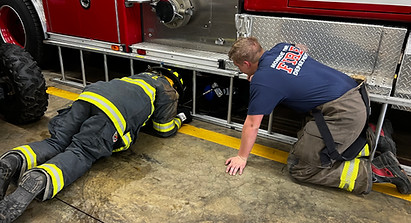


Over the years, the landscape of our staffing has evolved from volunteer only, to highly trained and staffed personnel.

It is a stark contrast of how far we have come over the last five years. Our roster today boast an increase in fully and highly certified personnel dedicated and ready to serve our community.
Volunteer vs. 24/7 Staffed Coverage - What's the Difference?
1. Response Time & Reliability
24/7 Coverage: Crews are already at the station, ready to roll in 60-90 seconds after a call. Average turnout time is consistent, whether it’s 2:00 PM or 2:00 AM.
12-Hour Staffing: At night, response often relies on volunteers/on-call staff driving in from home. This can add 5–10+ minutes before apparatus leaves the station, especially in rural areas.
Benefit: Quicker response saves lives in cardiac arrests, house fires, and vehicle accidents where minutes are critical. The “golden hour” for trauma and the “flashover window” for fires both favor 24/7 staffing.
2. Fire Containment & Property Preservation
Fires double in size every ~60 seconds under certain conditions.
A staffed station can get water on the fire while it’s still room-and-contents, instead of waiting until it becomes a fully involved structure fire.
Insurance ratings (ISO / PPC) often factor in staffing and response times; 24/7 coverage can help reduce homeowners’ and businesses’ premiums.
3. EMS Outcomes
Many departments run a majority EMS calls (often 60–80% of volume).
24/7 staffing guarantees rapid medical intervention (CPR, defibrillation, airway management, medications).
Survival from cardiac arrest drops about 7–10% per minute without CPR/defibrillation — so immediate availability can double or triple survival odds compared to delayed/on-call coverage.
4. Community Confidence & Equity of Service
Citizens expect consistent service at any hour.
A 24/7 staffed department reassures the community that help is always immediately available.
Businesses, schools, and senior facilities often look more favorably at communities with full-time fire/EMS coverage, which can support economic growth and stability.
5. Safety for Firefighters
Full-time staffing means more firefighters launch immediately.
Volunteers arriving separately may lead to initial under-staffing, delaying safe interior attack or rescues.
24/7 staff can maintain higher readiness through daily training, physical fitness, and regular exposure to calls.
6. Operational Benefits
Apparatus checks, hydrant inspections, pre-plans, fire prevention, training, and community outreach can be performed during all shifts, not just daytime.
Stations remain staffed for major weather events, mass-casualty incidents, or mutual aid needs without lag.
More consistent shift coverage reduces burnout among volunteers who might otherwise be awakened repeatedly at night.
7. Financial / Insurance Impacts
ISO (Insurance Services Office) fire ratings factor in staffing.
Better ISO ratings can mean lower homeowner and business property insurance premiums across the township/city.
While 24/7 staffing is more costly in payroll, the community may recoup value via reduced property loss, better insurance rates, and lives saved.
8. Community Resilience
With 24/7 staffing, the department is better prepared for simultaneous calls (two EMS calls at once, or a fire during a medical).
During disasters (storms, floods, blizzards), staffed stations can provide immediate shelter, response, and coordination.
Not only has the staffing landscape evolved, but so has the cost of being effectively equipped to respond to emergencies


"We are thankful to have been awarded over $300,000 in grants in the last 5 years, which has helped with critical improvements like new hoses, electric tools, and replacing well used turnout gear, to name a few."
- Chief Halcomb
What happens when a department has 24/7 coverage with excellent response times and is well equipped? It moves departments like Monroe Township Fire Department into a higher ISO rating.
Moving from ISO 9 → ISO 5 can cut homeowner’s insurance premiums by 20–30%.
.png)
Impact on YOUR Insurance Premium
Moving from ISO 9 → ISO 5 can cut homeowner’s insurance premiums by 20–30%.
For commercial/agricultural buildings, savings can be thousands per year.
Example: In some rural Ohio counties, homeowners reported saving $200–$600 annually after ISO improvements. Large farms/industries saved tens of thousands.
When viewed side by side - The choice is clear!
Volunteer / 12-Hour Staffed
-
ISO often 6–9
-
Longer response times
-
Lower staffing credit
-
Higher insurance premiums
-
Limited training hours
24/7/365 Staffed
ISO improves to 3–5 (sometimes 2–3)
Consistent rapid turnout
Full crews = safer, more effective operations
Lower community insurance rates
Higher credibility for grants, funding, and attracting businesses
For rural areas, transitioning to 24/7 staffing is one of the fastest ways to improve ISO rating, which directly benefits residents (lower insurance bills), the fire department (better staffing/safety), and the community at large (property protection + economic development).
We kindly ask that you vote YES on November 4th!